
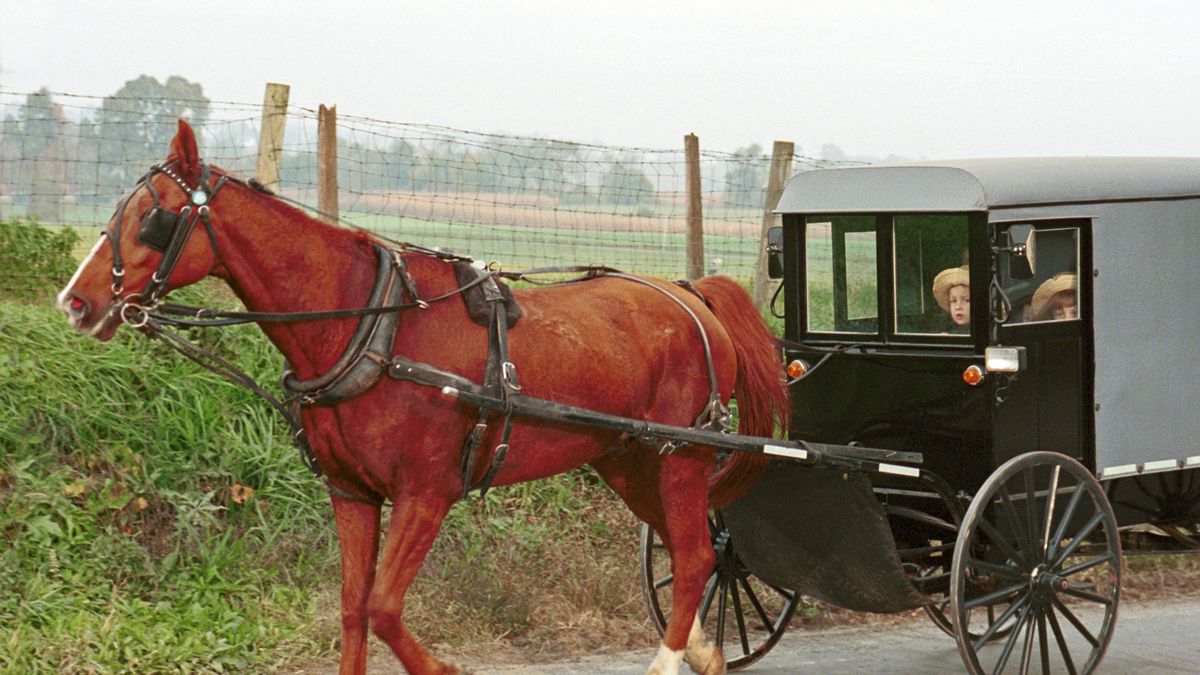
Stand beside a well-built carriage on a quiet lane and you will notice the sound before anything else: a low wooden creak, the ring of an iron tyre on gravel, the jingle of harness. Nothing rattles. That quietness is the signature of traditional coachbuilding, a craft whose principles have barely changed in two centuries. Whether you are restoring a Victorian gig, commissioning a new exercise cart, or simply curious about what happens inside a coachbuilder's workshop, the methods are worth understanding — and, happily, they are learnable.
What follows is a beginner's tour of the materials, joints and metalwork that give a carriage its strength, plus a word on the harness that makes the whole thing go.
Timber choice is not sentimental. Each part of a carriage does a different job, and the wood is selected accordingly.
Moisture content matters as much as species. Air-dried stock at roughly 12–14 per cent is the traditional target; timber that is too wet will shrink and loosen every joint around it, while over-dried wood becomes brittle. Good workshops stack and season their own boards for years, and they will tell you which tree a particular shaft came from.
Look closely at a carriage frame and you will see very little glue. The structure holds together through mortise-and-tenon joints, draw-bored and pinned with tapered wooden pegs that pull the shoulders tight. The peg is slightly offset from the hole in the tenon, so driving it home acts like a clamp — a technique that has held together barns and coaches for centuries.
Curved members, such as the rounded corners of a phaeton body or the sweep of a fender, are produced by steam bending: the timber is softened in a steam box, clamped over a former, and left to cool and set. Thicker sections are laminated from several thin strips, glued and bent together, which is stronger and more stable than a single piece of the same dimensions.
Frames are rarely perfectly square. They are built with a slight draft — narrower towards the top — so water runs off and the body sits snugly without rattling. It is a detail nobody sees and everybody feels.
A traditional wheel is a small feat of engineering. The hub is turned from elm, spokes are set in at an angle to create the dish, and the felloes — the curved rim sections — are jointed end to end and dowelled. The whole assembly is then bound with an iron tyre.
Fitting a tyre is the moment most beginners find unforgettable. The hoop is heated in a forge until it expands, dropped over the wheel, and quenched. As it cools it shrinks, clamping every joint tight and giving the wheel its characteristic ring. Get the calculation wrong and you either lose the wheel or crush it.
Elsewhere, ironwork is largely about wear and articulation: axle arms, the fifth wheel or turntable that lets the front axle pivot, the swingle tree for a pair, and the footboard irons. Brass is reserved for lamps, rein rails and other details that reward polishing. Traditional practice is to keep metalwork galvanised or painted where it is hidden, and bright where it is seen.
A carriage that drives badly is often not a carriage problem at all. Harness must be fitted to the animal and adjusted to the vehicle, and the two are inseparable.
For care, less is more. Wipe leather down after every outing with a barely damp cloth, clean with saddle soap, and feed sparingly with a quality leather dressing — over-oiling rots stitching faster than sweat ever will. Check stitching at the trace ends and billet straps before each drive, keep brass free of verdigris, and store harness on a shaped rack in a dry, airy tack room rather than a sealed cupboard.
Rural heritage lives in these details. A carriage kept in a dry, ventilated building, standing on blocks so the tyres are off the ground, will outlast most of its owners. Wash mud off with water rather than a pressure washer, touch in bare timber with linseed oil, and resist the urge to over-restore — a sympathetic repair is always worth more than a shiny one.
If you want to learn, the routes are practical rather than academic. Agricultural colleges run short courses in wheelwrighting and carriage restoration; county shows and driving trials are full of owners happy to talk; and many workshops will take on a willing pair of hands for a season. Bring a notebook, expect to sweep up, and pay attention to the pegs.

Hi, my name is Anthony kuber. I am artist and fashion designer.
I love to travel and writing blogging.
Your email address will not be published. Required fields are marked *
Software Developer & Writer
Hey, I'm Diva, a developer and writer blending code and creativity. I'm driven by a deep curiosity and a relentless pursuit of excellence. Join me as I craft digital solutions and captivating stories.


