
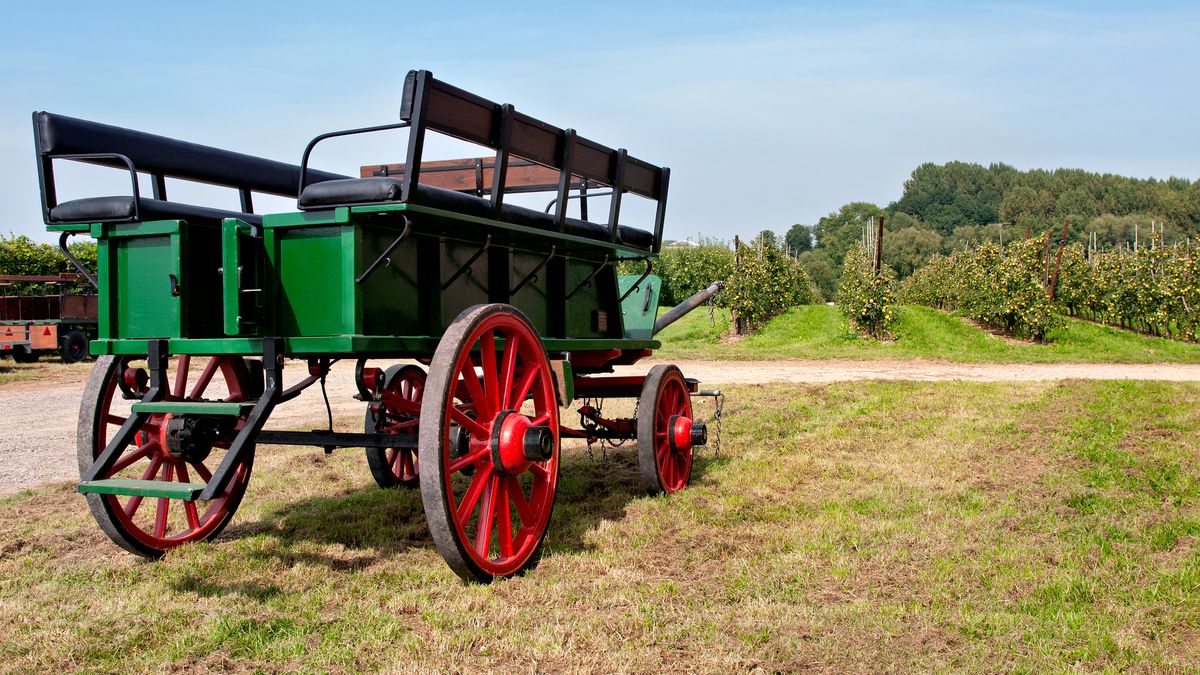
Every carriage looks handsome in a photograph. Far fewer look handsome halfway up a wet clay slope in November with a nervous groom walking at the wheel. When couples ask which carriage suits a country wedding, the honest answer is that the venue chooses the carriage, not the other way round. A long, low phaeton that glides along a tarmac drive may struggle on a rutted farm track; a sturdy wagonette built for estate work will shrug off the same ground without complaint.
Before you fall for paintwork and brass, walk the route yourself in the weeks beforehand. Note the surfaces, the slopes, the gateways and where the light falls in the late afternoon. Then match the vehicle to the reality of the day. It is far easier to change the carriage than to change the landscape.
Rural venues are rarely designed around a horse and carriage. Measure the narrowest point on the route, whether that is a stone gateway, a cattle grid or a bridge with a weight restriction. A pair of horses and a four-wheeled carriage needs a generous amount of space to turn safely, and the turning circle at the church lychgate or the marquee field entrance is often an afterthought.
If the reception is in a field, ask who is responsible for mowing, rolling and marking the route. A well-cut strip makes an enormous difference to how confidently the horses move.
An open carriage — a wagonette, brake or jaunty — gives guests the full sweep of the countryside, the scent of cut grass and the sound of the harness. It is unbeatable on a still June afternoon. But it offers no shelter when a shower arrives sideways, and a bride in silk will not thank you for a soaking before the photographs.
An enclosed carriage such as a landau, brougham or Victoria offers protection, a degree of privacy and a calmer environment for nervous passengers or young children. The compromise, of course, is that your guests see less and the atmosphere is more formal. Many couples choose a landau precisely because the hood can be raised or lowered, giving them both options on the day.
Consider the shape of the journey too. A ten-minute trip to the church is one thing; a forty-minute tour of the estate is quite another. The longer the journey, the more shelter matters.
The temperament of the team matters more than breed or colour. A wedding day brings flapping bunting, cheering crowds, clicking cameras and a piper in a kilt — all things a quiet driving horse may never have met. Ask how the horses behave in traffic, around dogs and in the presence of strangers in unusual clothing.
Whatever the arrangement, the horses should arrive well-groomed, correctly shod and worked the day before so they are settled rather than fresh. Well-kept harness — supple leather, polished brass, clean collars — tells you a great deal about the standard of care behind the scenes.
British weather does not simply affect comfort; it changes the ground underfoot. Summer drought turns pasture into a hard, uneven surface. Autumn rain softens gateways into porridge. Frost makes a track slick until mid-morning. Plan the route with the season in mind and have a shorter alternative ready in case of heavy rain the night before.
Where ground is genuinely unsuitable, it is perfectly reasonable to arrange for the carriage to meet guests at a firm surface and let them walk the last stretch. Nobody remembers that small compromise; everybody remembers a horse slipping.
Think about who is travelling. Elderly relatives may struggle with a high step, so ask for a mounting block and a steady arm. Long dresses need space and a low sill. Children need an adult beside them. Rugs, lap blankets and a discreet umbrella basket are small touches that make an open carriage genuinely usable in a British summer.
Finally, brief your guests. Tell them where to stand, when to stop throwing confetti and how to approach the horses quietly. A calm, well-briefed crowd is the single greatest gift you can give a carriage driver — and it lets everyone enjoy the slow, unhurried procession that makes a country wedding feel properly rooted in the landscape.

Hi, my name is Anthony kuber. I am artist and fashion designer.
I love to travel and writing blogging.
Your email address will not be published. Required fields are marked *
Software Developer & Writer
Hey, I'm Diva, a developer and writer blending code and creativity. I'm driven by a deep curiosity and a relentless pursuit of excellence. Join me as I craft digital solutions and captivating stories.


