
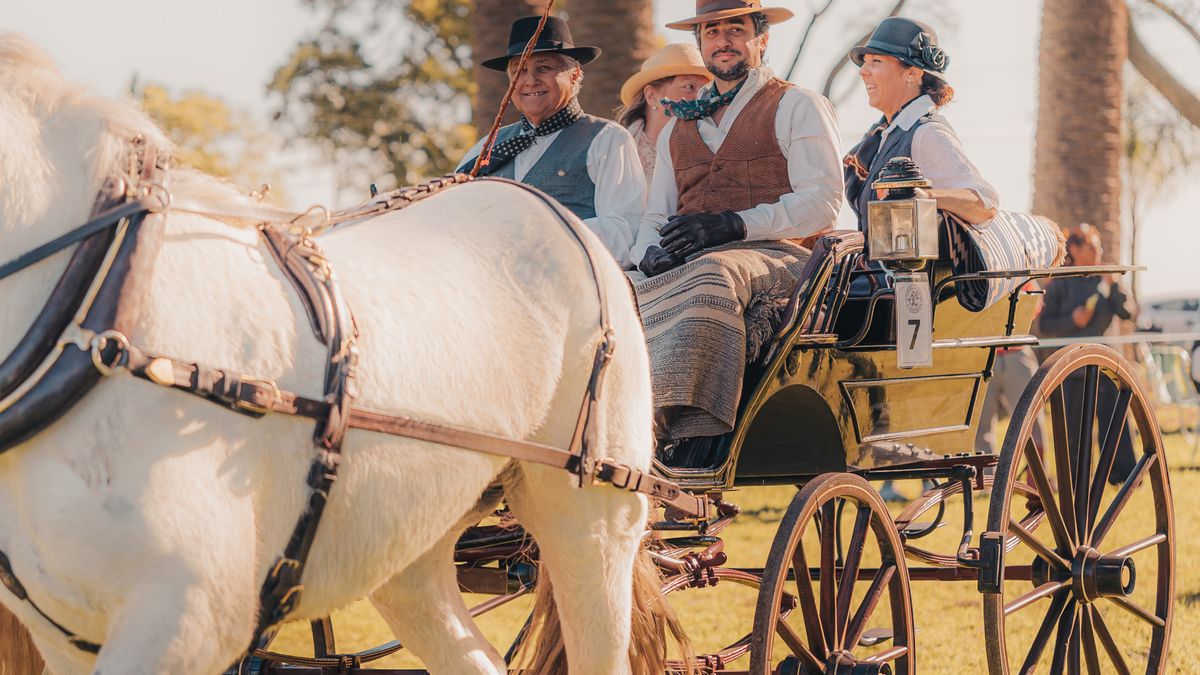
Driving a single horse teaches you to feel one mouth, one shoulder and one stride. Driving a pair asks for more: two mouths, two strides, and an understanding of how the two horses balance against one another through the pole between them. When that balance is right, the pair moves as one willing unit. When it is wrong, you feel every small disagreement down the reins.
The change is less about new aids than about a new habit of attention. With one horse, corrections are made almost without thinking; with two, every correction is read by both animals, and a horse asked to hurry while its partner is held back will soon lean on the pole, drop a shoulder or rush. Match your pair in pace and temperament, and school them together on quiet lanes long before you ask them for anything ambitious.
A pair harness is two single harnesses working as one team, linked by the pole. Each horse wears its own bridle with blinkers, collar or breast harness, pad, crupper, breeching, traces and reins; the pole runs between the two, held at the correct height by the pole strap and chains. Before you take your seat, walk the whole turnout:
Many drivers prefer the steadier horse on the near side, where the traffic passes, if there is a difference between the two.
Each horse carries two reins, one either side of the neck, so you hold four reins — two in each hand. The usual arrangement puts the two reins running down the left of the pole in the left hand and the two on the right in the right hand, so both hands have a feel of both horses. Separate them between your fingers: with each rein lying against a different finger, a small squeeze of the index or little finger speaks to one horse alone.
Keep the reins even in length and your hands low, quiet and slightly apart. The commonest fault is a driver who saws with the left hand to correct the near-side horse and jerks the off-side horse at the same moment. Feel for the pair rather than the individual: half-halts made gently with both hands, followed by a soft release, do more to keep two horses together than any amount of fussing. A coupling rein joining the two bits is sometimes fitted so that a pair can be driven on two reins, but it is no substitute for learning to manage four.
A pair turns around its pole. On a left-hand turn the near-side horse shortens stride and the off-side horse lengthens, and the pole follows the arc between them. Pair turns are therefore always wider than the same turn with a single horse, and a turn cut too tightly will shove the inside horse sideways against the pole. Ask early, keep the sweep generous, and support the outside horse with an even contact.
Halting should be a closing of both hands, not a pull. Say "steady", close the hands and wait. If one horse stops and its partner walks on, correct the one still moving; punish the horse that obeyed and it will soon resent the bit.
Reversing deserves caution. The pole head bites into the ground as the pair steps back, and on soft ground it will dig in and snatch the pole strap. If you must reverse, ask a step at a time, keep the pole head just clear and put a groom at the horses' heads.
Harness is driving's safety equipment, and it repays a few minutes after every outing. Sponge the sweat from straps and linings before it dries, then hang the harness on a proper peg so the leather keeps its shape. Clean with saddle soap and warm water rather than neat oil: over-oiling softens the stitching, and a trace that gives at the buckle starts accidents.
Pairs were the working unit of the British countryside: the farm wagon, the timber cart, the estate carriage and the coach on the turnpike all relied on two horses driven together, and the people who drove them passed the skill on by apprenticeship rather than by book. Motor transport ended the working day for most pairs, but the craft survived in the show ring, at ploughing matches, in private driving classes and on the coaching runs that still cross country each season.
That inheritance is worth keeping honestly. Learn from a driver with grey hairs and a quiet pair; put in the hours on the lanes before you dress a turnout for a show. The horses in front of you will teach you the rest, one stride at a time.

Hi, my name is Anthony kuber. I am artist and fashion designer.
I love to travel and writing blogging.
Your email address will not be published. Required fields are marked *
Software Developer & Writer
Hey, I'm Diva, a developer and writer blending code and creativity. I'm driven by a deep curiosity and a relentless pursuit of excellence. Join me as I craft digital solutions and captivating stories.


