
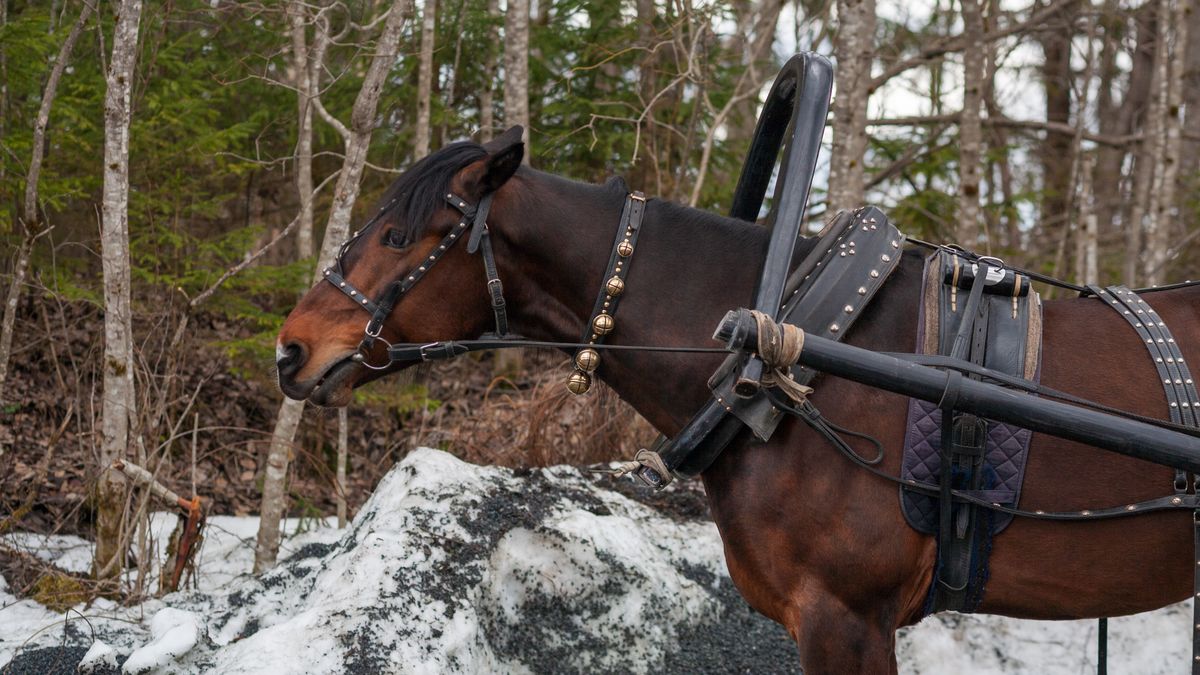
Carriage driving has a quiet advantage over many equestrian activities: much of the learning happens at walking pace, close to the ground, with an adult never more than an arm's length away. A child can sit in a well-balanced exercise vehicle behind a sensible pony, feel the rhythm of the rein, and understand how a horse responds long before they take any real responsibility. That early familiarity is worth more than any amount of technical instruction. Choose a pony with a genuine reputation for patience, ideally one already used for driving with novices, and introduce children on calm, dry, familiar ground.
Children develop at different rates, so treat the ages below as a rough guide rather than a timetable. The principle is simple: give a child only as much as they can do successfully and safely, then add a little more.
Resist the temptation to rush a child towards driving a pair or a four-wheeled vehicle. Confidence grows from repetition, not from achievement.
The most useful thing a young person can learn around a driving pony is how to read it. Teach them to notice the ears, the breathing, the shift of weight before a spook. Insist on quiet movement around the vehicle and the horse, and on speaking before touching so the animal is never startled. When leading, the child should walk beside the shoulder, never in front of the pony, with the lead rein folded neatly and never wrapped around a hand.
Harness handling is an ideal place for supervised responsibility. A child can hand you each strap as you hitch, then check the buckle behind you. Build a habit of running through a mental list: bridle and bit, collar or breastplate, traces, breeching, girth, crupper, reins, and the quick-release knot. If a strap is worn, cracked, or has loose stitching, the child should be taught to point it out rather than ignore it. That single habit prevents more accidents than any other piece of knowledge.
Young drivers learn best when they are having fun and nothing is at stake. Try these:
Keep sessions to twenty or thirty minutes for younger children, always end while things are still going well, and never push on because the weather is fine or a relative is watching.
Carriage driving survives in Britain because families, small yards, saddlers and country shows keep it alive. Children who learn to clean and inspect a harness, repair a cracked strap, or hold a pony steady while the traces are hooked up are learning skills that were once everyday rural knowledge. They are also learning patience, gentleness and respect for an animal that cannot speak for itself. That inheritance is not passed on through pressure or competition. It is passed on quietly, one short, happy session at a time.

Hi, my name is Anthony kuber. I am artist and fashion designer.
I love to travel and writing blogging.
Your email address will not be published. Required fields are marked *
Software Developer & Writer
Hey, I'm Diva, a developer and writer blending code and creativity. I'm driven by a deep curiosity and a relentless pursuit of excellence. Join me as I craft digital solutions and captivating stories.


