
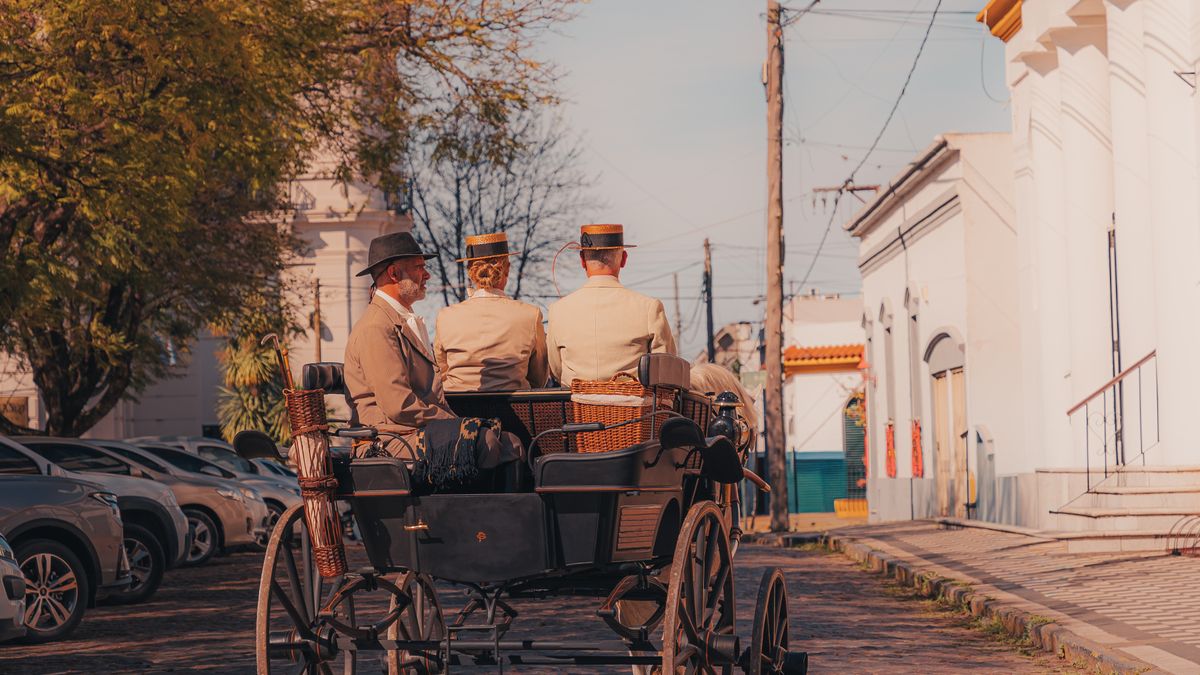
The first carriage drive is not the beginning. It is the reward for weeks, sometimes months, of quiet and consistent groundwork. A horse that is calm in hand, confident in its own skin and respectful of your space will take to harness far more readily than one that has been rushed towards the vehicle. In the British driving tradition, patience has always been the greatest skill, whether on a farm track or a quiet country lane.
Start in an enclosed, familiar space with good footing. Work your horse in a halter or simple bridle, asking for walk, halt and smooth transitions from voice and rein aids. You are not looking for perfection, but for a horse that listens and relaxes.
Carriage driving asks a horse to accept flapping leather, rattling traces, shafts alongside its body and strange shapes behind it. Desensitisation should be slow, calm and always within the horse’s comfort zone. If the ears are tight and the feet are dancing, you have asked too much, too soon.
Introduce soft ropes and cloths over the neck and quarters, then let them slide down the legs. Use a long stick or whip to stroke the body before moving it near the wheels or shafts. Noise matters as much as touch: rattling buckets, chains, a bicycle bell and the scrunch of gravel are all part of rural Britain. Reward the slightest relaxation with a pause and a quiet word.
Never put a full set of harness on a young or green horse in one go. Build it up over several short sessions, and always check fit before you ask for movement. A well-fitted harness should allow free movement and breathing, with no rubbing, pinching or pressure points. In the damp British climate, clean leather also lasts longer and stays supple, so make inspection part of every session.
After each session, wipe leather with a damp sponge, use saddle soap sparingly, dry thoroughly and hang harness on a shaped rack. Check stitching, buckles and billet straps weekly. Rural heritage depends on this care: a cracked strap is a serious risk, not just an untidy one.
Long-reining is the bridge between the hand and the carriage. Work behind the horse with two reins, asking for walk, halt and large turns. Keep your voice quiet and your hands soft. Once the horse is relaxed, add a light drag: a tyre or small log attached to the traces, with an assistant at the head. Let the horse feel the weight and hear the noise without fear.
Progress to pulling the drag around the arena and over different surfaces. Introduce shafts in a safe enclosure, either as a pair of poles on the ground or attached to a drag. Walk alongside, lift them gently and let the horse stand. This is the stage where many traditional drivers spend the most time, because a horse that accepts shafts on the ground will accept them beside the carriage.
Choose a quiet, enclosed area with good footing and no distractions. Have at least two experienced people: one at the horse’s head and one to handle the vehicle. Let the horse inspect the carriage, stand alongside it and feel the shafts move gently. Then, calmly and without fuss, put the horse to.
The first drive should be short, perhaps ten to fifteen minutes, at walk only. Go large and steady, with gentle turns and plenty of halts. Keep the reins light and the voice reassuring. If the horse tenses, halt, breathe and wait. End on a relaxed note before fatigue or worry sets in. After unhitching, remove the harness slowly, check for rubs and let the horse roll or graze if it is safe to do so.
The day after the first drive, check legs, back and mouth. Sponge the bit, dry all leather and inspect every strap in good light. A little daily care prevents mould, cracking and dangerous failure. Store harness in a dry, airy tack room away from damp walls and direct heat.
Traditional carriage driving is part of Britain’s rural heritage: the quiet lane, the farm gateway, the county show and the craft of the saddler and wheelwright. It endures because it is built on trust. Prepare your horse slowly, listen to its confidence, and the first drive will be the beginning of a partnership rather than a test of nerve. Take your time, keep sessions short and kind, and let the countryside unfold at a walk.

Hi, my name is Anthony kuber. I am artist and fashion designer.
I love to travel and writing blogging.
Your email address will not be published. Required fields are marked *
Software Developer & Writer
Hey, I'm Diva, a developer and writer blending code and creativity. I'm driven by a deep curiosity and a relentless pursuit of excellence. Join me as I craft digital solutions and captivating stories.


